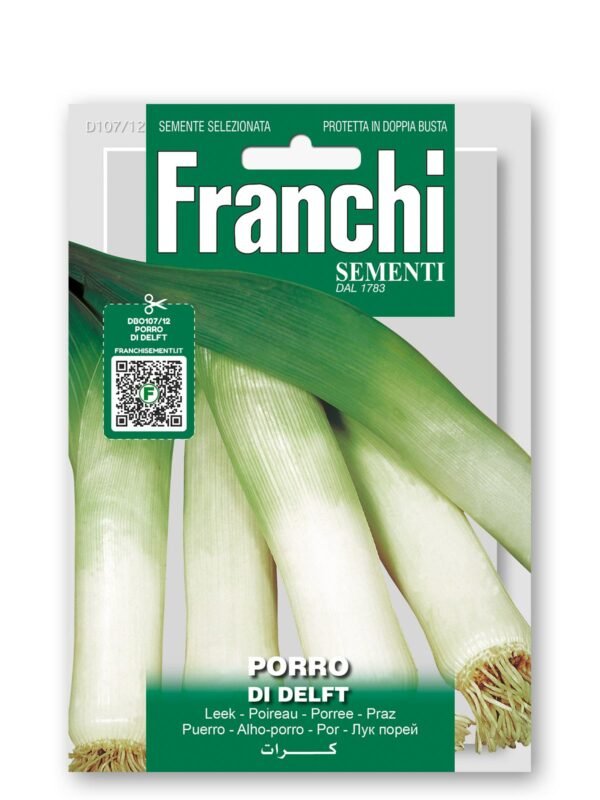
Porro di Delft is a winter-hardy late leek that stands in the ground right through an Irish winter without flinching. Thick white shanks with a mild, sweet flavour that is excellent in soups, pies, gratins and classic potato and leek combinations.
Sow in spring, transplant in summer, harvest from autumn through to the following spring. Leeks are one of the most reliable crops for Irish gardens because they thrive in exactly the conditions we have: cool, wet winters.
🌱 Sowing: February to May (indoors or nursery bed)
☀️ Light: Full sun
🌡️ Germination: 10 to 20 days
📏 Height: Medium to tall, broad dark green leaves
🪴 Spacing: 15 to 20 cm between plants, 30 to 40 cm between rows
⏳ Harvest: October to March
🌿 Growing tips for Ireland Sow in modules or trays from February onwards in a cool greenhouse, polytunnel, or bright windowsill. Transplant outdoors when seedlings are pencil-thick, usually June or July. Make a deep hole with a dibber, drop the seedling in, and water in without backfilling. This old trick produces longer, better-blanched stems.
Earth up around the stems as they grow through autumn to increase the length of the white, tender portion. Mulch between rows to retain moisture and suppress weeds. Leeks are one of the most trouble-free vegetables in Irish conditions. They tolerate heavy soil, wet weather, and hard frost. Harvest as needed through the winter, leaving the rest standing in the ground as a living larder.