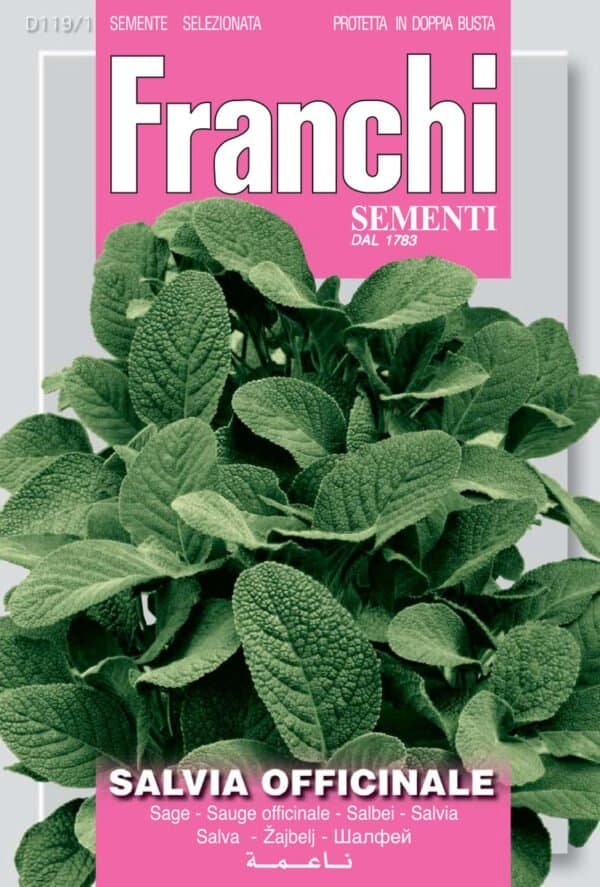
Sage is a perennial Mediterranean herb with grey-green velvety leaves and a deep savoury aroma. Plant it once and it comes back every year, getting bigger and better. The blue-lavender flowers attract bees, and the leaves are ready to pick whenever you need them.
In the kitchen, sage goes with pork, sausages, poultry and root vegetables. Fry a few leaves in brown butter until crisp, pour it over gnocchi or ravioli, and you have a ten-minute dinner that tastes like a restaurant. One plant is enough for most families.
🌱 Sowing
Sow indoors from mid‑March or outdoors from April in light, free‑draining compost. Cover lightly, keep just moist and place in a warm, bright spot. Germination is slow. Pot on or plant in small clumps once seedlings are large enough to handle.
☀️ Light
Thrives in full sun, which enhances essential oils and flavour. Choose a warm, sheltered, south‑ or west‑facing position.
💧 Water
Prefers well‑drained soil and becomes drought‑tolerant once established. Water regularly in the first season and during long dry spells, but avoid waterlogging.
🌡️ Germination
Germinates in 14-21+ days at 15-21 °C. Early sowings benefit from a warm windowsill, propagator or tunnel.
📏 Spacing
Plant 30-45 cm apart. Mature plants reach 45-60 cm tall and wide, forming compact shrubs that respond well to light pruning.
🌼 Harvest
Harvest lightly once plants are established, usually from late summer of the first year. For drying, cut non‑flowering stems in early summer and air‑dry in bundles.
Bullet Technical Data
🌱 Sowing depth: 0.5-1 cm
📅 Sow: mid‑March to late September; plant out after frost
☀️ Light: full sun, warm and well‑drained
🌡️ Germination: 14-21+ days at 15-21 °C
📏 Height: 45-60 cm
🪴 Spacing: 30-45 cm
⏳ Maturity: light harvests late summer year one; full production year two
🧪 Seeds: approx. 4500 per 1.5 g packet